
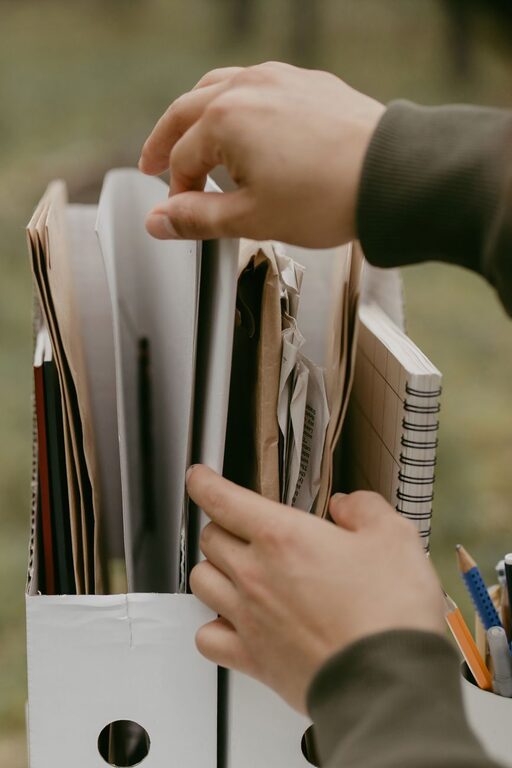
Paper clutter can build up quickly. Mail, receipts, school papers, manuals, invitations, and notes often collect on counters, desks, and kitchen tables. Before long, it becomes difficult to find the document you need.
The good news is that reducing paper clutter does not require a perfect filing system or an entire weekend. A few simple habits can make a noticeable difference. The goal is to keep only what you need, give every important paper a home, and prevent new piles from forming.
Start With a Quick Sorting System
Before deciding where everything belongs, gather the loose papers from around your home. Check countertops, drawers, bags, desks, and other common drop zones. Work in one area at a time so the project feels manageable.
Create four basic categories:
– Action: Papers that require a response or task
– Keep: Documents you may need later
– Recycle: Papers with no useful information
– Shred: Documents containing private details
Use separate boxes, folders, or piles for each category. Avoid stopping to read every page in detail. Your first goal is simply to sort the papers.
Once the initial sorting is complete, deal with each category separately. Recycle unwanted papers promptly, and place documents for shredding in a secure container until you can shred them.
Set Up a Simple Paper Station
A small, clearly labeled paper station can keep important documents from spreading throughout the house. It does not need to be a large cabinet. A desktop file box, wall organizer, or set of folders may be enough.
Consider using folders labeled:
– To Do
– To File
– Receipts
– Home
– School
– Medical
– Reference
– Warranties
Choose labels that match your household needs. If a category is rarely used, do not create a separate folder for it. Too many categories can make filing feel complicated and discourage you from using the system.
Keep the paper station in a convenient location, such as near the entryway or where mail is opened. A filing system works best when it is easy to reach.
Create a Mail Routine
Mail is one of the most common sources of paper clutter. Instead of placing it on the nearest surface, process it as soon as possible.
Try this simple routine:
- Remove mail from its envelope.
- Recycle advertisements and empty envelopes.
- Separate papers that require action.
- File documents that need to be kept.
- Place bills or forms in the appropriate task folder.
- Shred anything with private information that you no longer need.
You do not have to complete every task immediately. The important step is to decide where each item belongs. A small tray labeled “To Do” can prevent action papers from getting lost while keeping them off the kitchen counter.
Reduce Unwanted Mail
Preventing paper clutter is easier than managing it later. Look for ways to reduce the amount of mail entering your home.
You may be able to:
– Unsubscribe from catalogs and promotional mail
– Remove your name from mailing lists
– Choose paperless statements when available
– Ask organizations to update your mailing preferences
– Stop duplicate mailings sent to the same household
– Return unwanted mail according to the sender’s instructions
Set aside a few minutes each week to unsubscribe from one or two sources. Small changes can reduce the flow of paper over time.
Use Digital Copies Carefully
Many papers can be stored digitally instead of physically. Scan or photograph documents that you need to reference but do not need in their original form. This may include instructions, project notes, receipts, or household records.
Create a few broad digital folders, such as:
– Home
– Receipts
– School
– Work
– Projects
– Reference
Use clear file names that include the document type and date. For example, “Kitchen appliance receipt March 2026” is easier to find than “IMG_2048.”
Back up important digital files regularly. A second copy stored on a trusted external drive or secure cloud service can help protect your records if a device is lost or damaged.
Digital storage should not become another form of clutter. Review scanned files occasionally and delete duplicates or outdated documents.
Keep a Small Receipt System
Receipts can quickly fill wallets, drawers, and bags. Create one place for receipts as soon as you bring them home. A small envelope, accordion folder, or labeled container can work well.
Separate receipts by purpose if needed, such as:
– Returns
– Household purchases
– Work expenses
– Warranties
– Major purchases
Review the collection regularly. Remove receipts that are no longer useful, while keeping those connected to returns, warranties, or records you may need later. For larger purchases, scan the receipt and save it with the related product information.
Give Children a Paper Routine
Children often bring home artwork, worksheets, notices, and projects. Without a system, these papers can spread throughout the house.
Give each child a designated folder or basket for school papers. Sort the contents once a week and separate them into three groups:
– Papers that need a response
– Papers to keep temporarily
– Artwork or projects worth saving
Display a few favorite pieces instead of keeping everything. Take photos of artwork that is meaningful but difficult to store. At the end of the school year, review saved papers together and keep only the most important examples.
Use a One In, One Out Rule
For categories that tend to grow, use a one in, one out rule. When you add a new manual, recipe, magazine, or reference sheet, remove an older item from the same category.
This rule is especially useful for:
– Magazines
– Cookbooks and recipes
– Appliance manuals
– Takeout menus
– Printed reference materials
– Children’s artwork
Before storing a manual, check whether a current version is available online. If it is, you may only need to keep the model number and a digital copy of the instructions.
Schedule a Short Weekly Reset
Paper clutter is easier to manage when you handle it regularly. Set a timer for 10 to 15 minutes once a week. During that time, clear paper from visible surfaces and process your action and filing folders.
A weekly reset might include:
– Opening new mail
– Recycling outdated papers
– Filing documents
– Shredding private papers
– Scanning useful records
– Emptying the paper station
Short, consistent sessions are usually more effective than waiting until the clutter becomes overwhelming.
Decide What Deserves Space
The most useful question is not “Can I keep this?” but “Will I need this, and can I find it later?” Keep original documents when they are difficult to replace, legally important, or needed for future reference. For everyday information, a digital copy or clear note may be enough.
When you are unsure, create a temporary review folder. Write a review date on the folder and revisit it later. This gives you time to decide without creating a permanent storage problem.
Make the System Easy to Maintain
A paper organization system should fit your daily habits. If you dislike filing documents into many small folders, use fewer broad categories. If papers tend to collect near the door, place the paper station there. If you prefer digital records, keep scanning tools nearby.
The best system is one you will actually use. Start small, remove paper regularly, and make decisions as soon as possible. With a simple routine and a designated place for important documents, your home can stay clearer without requiring constant effort.